
BECKY ENRIGHT’s Story, told by Joah Iannotta
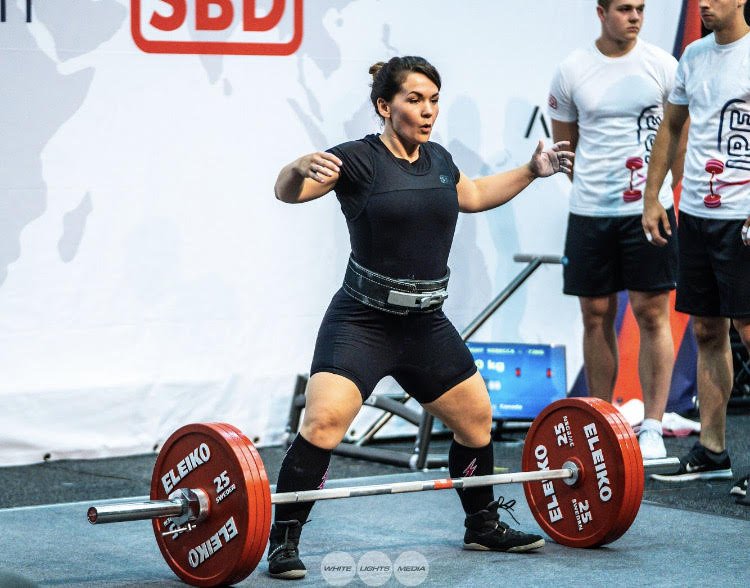
At the end of April, Becky Enright and I would have been on a flight to South Africa — Becky from Seattle and me from the opposite side of the country in Pittsburgh — to compete in the Masters World Championship. We had the great privilege of representing our country at an international competition, to show not only the strength of America but our graciousness, support of our competitors, and our passion for all of us to bring the best we can to the platform. As women, we also had an opportunity to show girls that it is OK to be strong, have muscles, compete without apology, take the risk that you might fail, and to be different in our determination to pursue our goals. These are lessons that as masters women we have come to learn. Becky and I are old enough that it wasn’t always OK to be a female athlete. We didn’t always have male athletes that we could hug and celebrate with and who recognized that we all had the same drive, the same experience pursuing excellence, and the same shared joy in this experience. Being strong in a very literal way is how Becky and I can remind women that they can pursue the things that they love and fight against the things that do them harm when they are vulnerable.
In early March, the U.S. went into lockdown to leverage social distancing to prevent the spread of a pandemic virus. Later in March, South Africa did the same. The championship was delayed until November. In theory.
Across the U.S., powerlifting competitions were shuttered. Then our gyms were. Our strength goals became ephemeral — no set dates, no targets — and not without discomfort, we set them aside to do what we could in cities, towns, and countrysides, getting creative with how we might do something so that when our gyms reopened we could eventually pick up somewhere in the region of where we left off.
Becky did more. As an emergency room nurse in Seattle, where the country’s first cases of Covid-19 were detected, she knew the risk our country was facing. Without taking measures to reduce the spread of a virus that was more contagious and deadly than the normal flu and for which we lacked a vaccine to prevent or reduce the effects, people were going to get very sick and our health care system’s ability to treat people would become overwhelmed. As it became clear that Seattle was at least initially successful in slowing the progression of the disease, one of our major travel hubs — New York City — quickly became the epicenter of the U.S. outbreak. In rapid order, New York hospitals were stretched so thin that they began the unthinkable in the U.S. — asking ethicists to consult on how they might ration care if they had too few ventilators, too few nurses, too few options to care for the sick.
New York escaped having to make these choices, but only very narrowly. As more and more healthcare workers fell ill with Covid-19, leaving patients with fewer nurses and doctors to care for them, people across the U.S. stepped up, including USAPL’s very own Becky Enright. Even though she was employed on the other side of the country, Becky felt the calling to support New York. At the height of the epidemic, she left her family because she has the lifesaving skills to provide for those in desperate need of care. Working 12-hour night shifts to relieve the pressure on exhausted New York health care staff, Becky stepped into the very front line of the crisis to care for her fellow citizens.
She didn’t have to do this. She could have stayed home. But some people, when they know they have skills that can help to turn the tide, feel compelled to share their strength with others. They choose to assume risk personal risk because other people need them.
There are other USAPL members who have similar stories, but Becky is my teammate on the U.S. National Powerlifting team, and I’m proud to write about her contribution. She reminds us what strength really is. It doesn’t matter how much we can deadlift if the mental toughness we gain on the platform is not shared with others.
As a member of USAPL, I want to say thank you to Becky and others, who are on the front lines helping the U.S. to control, survive, and recover from Covid-19 and reminding us all that our strength matters most when we share it with others.

THANK YOU BECKY!